




Artigos Científicos
Confira as principais publicações científicas que mencionam os produtos da Angelus.
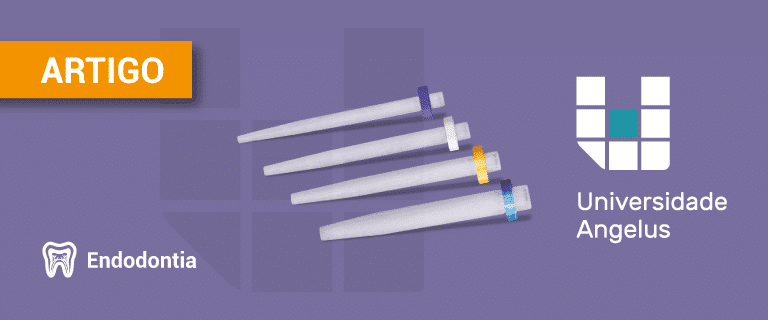
Anatomical post: a simple and safe alternative
RESUMO:
A utilização de pinos anatômicos com resina composta representa uma alternativa tecnicamente viável, de fácil aplicabilidade, com baixo custo e em única sessão, para reabilitação de dentes tratados endodonticamente com conduto radicular onde os pinos em fibra pré-fabricados convencionais não apresentam boa adaptação.
REFERÊNCIA:
CANESCHI, C.S.; ET AL. ANATOMICAL POST: A SIMPLE AND SAFE ALTERNATIVE. Revista Científica do CRO-RJ (Rio de Janeiro Dental Journal) v.7, n.1, January - April, 2022

Bioactivity Potential of Bioceramic-Based Root Canal Sealers: AScoping Review
RESUMO:
The objective of this study was to synthesize and map key concepts related to the bioactivity analysis of bioceramic-based root
canal sealers. BIOACTIVITY
REFERÊNCIA:
ESTILAVET, M.S.; ET AL. Bioactivity Potential of Bioceramic-Based Root Canal Sealers: A
Scoping Review. Life 2022, 12, 1853. https://doi.org/10.3390/life12111853
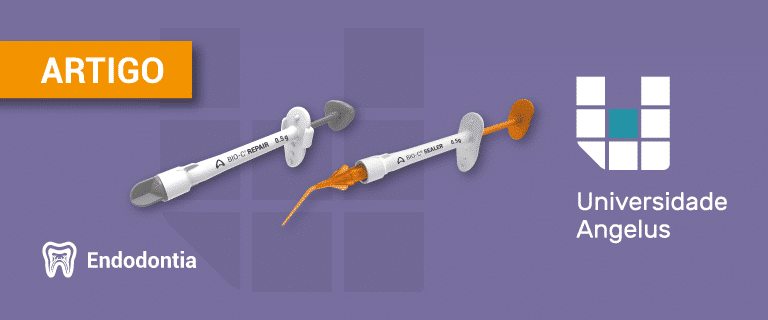
Biological E ects of New Hydraulic Materials onHuman Periodontal Ligament Stem Cells
RESUMO:
Bio-C Repair displayed higher cell viability, cell adhesion and migration rates than Bio-C Sealer
REFERÊNCIA:
LOPEZ-GARCIA, S.; ET AL . Biological E ects of New Hydraulic Materials on
Human Periodontal Ligament Stem Cells. J. Clin. Med. 2019, 8, 1216; doi:10.3390/jcm8081216
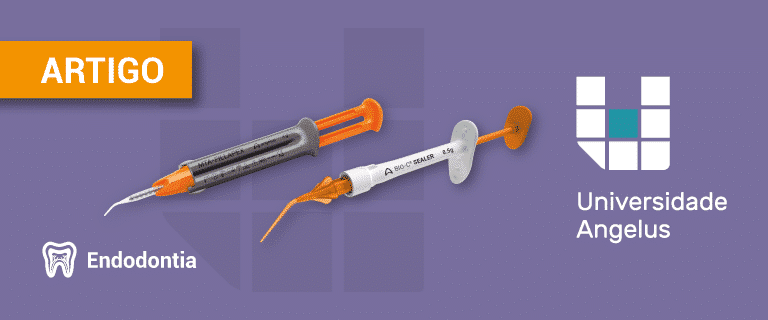
Comprehensive review of current endodontic sealers
RESUMO:
Compared to AH Plus, tricalcium silicate sealers show the lowest relative
microleakage among the sealers assessed, followed by silicone sealers and other non-AH Plus epoxy resin sealers. Tricalcium silicate
sealers also exhibit the most favorable antimicrobial effect and excellent biocompatibility. Future sealers developed should ideally
combine a hermetic seal with therapeutic effects.
REFERÊNCIA:
KOMABAYASHI, .; ET AL. Comprehensive review of current endodontic sealers. Dent Mater J 2020;Mar 24.
doi: 10.4012/dmj.2019-288.

Microstructural composition, ion release, and bioactive potentialof new premixed calciumsilicate–based endodontic sealers indicatedfor warm vertical compaction technique
RESUMO:
The calcium silicate–based sealers considered in the present in vitro study exhibited a high calcium ion release,
adequate cytocompatibility, upregulated osteo/cementogenic gene expression, and increased mineralized nodule formation in
contact with hPDLCs.
Clinical relevance From a biological perspective, BCI and BCHiF could be clinically suitable for root canal filling.
REFERÊNCIA:
SANZ, J.L.; ET AL. Microstructural composition, ion release, and bioactive potential
of new premixed calciumsilicate–based endodontic sealers indicated
for warm vertical compaction technique. Clin Oral Invest
DOI 10.1007/s00784-020-03453-8, JUL 2020
Biological assessment of a new ready-to-use hydraulic sealer
RESUMO:
Bio-C Sealer and white MTA-Angelus exhibited greater cytocompatibility than MTA-Fillapex; all materials displayed adequate biocompatibility and induced tenascin immunolabeling.
REFERÊNCIA:
BENETTI, F.; ET AL. Biological assessment of a new ready-to-use hydraulic sealer. Restor Dent Endod. 2021 May;46(2):e21
Obturation Techniques: A Prospective Clinical Study
RESUMO:
The success rate of used bioceramic sealers was not statistically significant different (99.1%, 100%, 97.5% and 100%, respectively, for CeraSeal, BioRoot, AH Plus Bio, and BIO-C SEALER ION). Nonetheless, the distribution of healed, healing, and not-healed teeth was different between teeth sealed with different materials (p < 0.01). From the findings of this clinical study, the following conclusion can be drawn: a correct filling of root canals made with warm gutta-percha technique
combined with a bioceramic sealer allows a high success rate in endodontically treated teeth.
REFERÊNCIA:
PONTORIERO, D.I.K.; ET AL. Outcomes of Endodontic-Treated Teeth Obturated with Bioceramic Sealers in Combination withWarm Gutta-Percha
Obturation Techniques: A Prospective Clinical Study. J. Clin. Med. 2023, 12, 2867. https://doi.org/10.3390/jcm12082867

The use of a new bioceramic material in endodontic microsurgery
RESUMO:
Synergism of clinical microscopy and ultrasonic devices allows the execution of extremely precise treatments. Endodontic microsurgery, when performed within the modern concepts, is a remarkable therapeutic alternative, predictable and viable for the conservation of teeth with secondary or persistent apical periodontites. A new generation of premixed bioceramic products simplifies retrofilling procedures and might has elicited quicker and complete apical bone repair. RETROFIILING
REFERÊNCIA:
PEREIRA. L.. The use of a new bioceramic material in endodontic microsurgery. ROOTS MAGAZINE, 1_2019

Cytotoxicity, Biocompatibility andBiomineralization of a New Readyfor- Use Bioceramic Repair Material
RESUMO:
The materials’ cytocompatibility was similar at 48h for most dilutions (p>0.05). At 7 and 30 days, the groups had moderate and mild inflammation, respectively (p>0.05). All materials showed positive structures for von Kossa and polarized light. In conclusion, Bio-C Repair had similar cytocompatibility to MTA-based materials is biocompatible and induces biomineralization.
REFERÊNCIA:
BENETTI, F.; ET AL.; Cytotoxicity, Biocompatibility and
Biomineralization of a New Readyfor- Use Bioceramic Repair Material. Brazilian Dental Journal (2019) 30(4): 325-332

CARE
Central Angelus de Relacionamento
Angelus e Prima Dental by Angelus
Segunda a sexta, das 7h30 às 17h30 (GMT-3).


